
Man Cave Buyers Guide is a participant in the Amazon Services LLC Associates Program. If you buy through links on this page we may earn a commission, at no extra cost to you. We do not accept manufacturer samples or payment for favorable coverage.
Few things stall a friendly game of pool faster than an argument over whether a shot was a scratch. Someone swears the cue ball barely tapped the rail before dropping in, someone else insists it is ball-in-hand anywhere, and the game grinds to a halt. Pool table scratch rules are not actually complicated once you separate the universal basics from the game-specific variations, and that is exactly what this guide sorts out.
Quick answer: A scratch happens when the cue ball is pocketed or leaves the table after a shot. In most rulesets the shooter’s turn ends immediately and the opponent gets ball-in-hand anywhere on the table, though straight pool and some casual house rules handle placement differently.
What Counts as a Scratch on a Pool Table
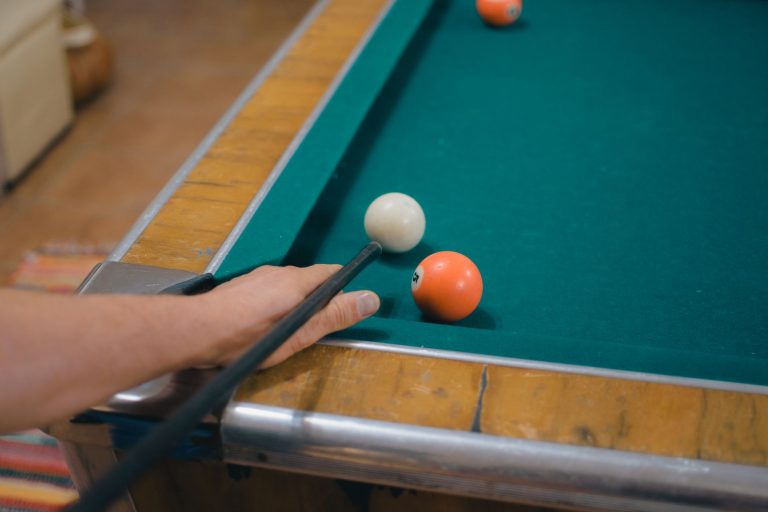
A scratch, in billiards terms, specifically refers to the cue ball. If the cue ball drops into any pocket, flies off the rail onto the floor, or is otherwise removed from play after contact, that is a scratch. It is a type of foul, but not every foul is a scratch. Hitting the wrong ball first, failing to contact any ball, or not driving a ball to a rail after contact are also fouls, just not scratches specifically.
This distinction matters because the penalty for a scratch (ball-in-hand for the opponent) is usually more severe than the penalty for a non-scratch foul, which in some casual rule sets is just a loss of turn. Knowing which bucket a shot falls into is the first step to settling any dispute.
Pool Table Scratch Rules by Game Type
The exact pool table scratch rules you play by depend heavily on which game you are running. The three most common formats each treat scratches a little differently, so it helps to agree on the format before the first break.
8-Ball Scratch Rules
In standard 8-ball, scratching on any shot except the 8-ball hands the table to the opponent with ball-in-hand, meaning they can place the cue ball anywhere and shoot from there. Scratching on the 8-ball itself is typically treated as loss of game under most rule sets, including the common World Pool-Billiard Association (WPA) rules, though plenty of bar and home groups soften this to a re-rack instead. It is worth agreeing on this one specifically before you start, since it is the single biggest source of post-game arguments.
9-Ball Scratch Rules
Nine-ball is usually played with strict ball-in-hand rules, meaning any scratch at any point in the rack, not just on the 9-ball, gives the opponent the cue ball anywhere on the table. This is part of what makes 9-ball a faster, more punishing game than 8-ball for casual players, since a single sloppy scratch can hand over control of the entire rack.
Straight Pool and General House Rules
Straight pool (14.1 continuous) traditionally penalises a scratch by subtracting a point and sometimes restricting where the cue ball can be placed, rather than giving a free ball-in-hand anywhere. Many casual home groups borrow a hybrid approach: ball-in-hand behind the head string only, rather than anywhere on the table, which keeps a slight disadvantage for the fouling player without being as punishing as full ball-in-hand. None of these variations are wrong. They are house rules, and house rules only cause problems when nobody states them out loud first.
What Happens After a Scratch: Ball-in-Hand Explained
Ball-in-hand means the non-fouling player can pick up the cue ball and place it anywhere legal before shooting, rather than playing it from where it landed. There are two common variants worth clarifying with your group:
- Ball-in-hand anywhere on the table, the most common tournament and bar-table standard.
- Ball-in-hand behind the head string only, a softer house-rule variant often used in casual 8-ball.
On smaller bar-box tables, a cue ball placed anywhere can sit uncomfortably close to a cluster of balls near a pocket, which is one reason some groups prefer the behind-the-line variant on a 7-foot table but switch to anywhere-on-the-table for a larger 8-foot or 9-foot setup. If you are weighing table size against how scratches tend to play out, our 8 foot pool table buying guide covers how pocket size and rail height affect how often scratches happen in the first place.
A Quick Framework for Choosing Your House Rules
Rather than Googling a new ruling every time a dispute comes up, settle your group’s scratch rules once using this three-question framework before anyone racks the balls.
- Who is playing? Casual mixed-skill groups usually do better with softer penalties (loss of turn, re-rack on an 8-ball scratch). Competitive or evenly matched players tend to prefer strict ball-in-hand, since it rewards precision.
- What table are you on? Smaller or older tables with tighter pockets scratch more often on borderline shots, so a brutal ball-in-hand-anywhere penalty can make games feel one-sided fast.
- Which game are you running? 8-ball, 9-ball and straight pool each have an established default, so start there and only deviate if your group genuinely prefers something else.
Write the agreed rules on a card or sticky note near the table. It sounds unnecessary until the third argument of the night.
Common Scratch Rule Mistakes
- Assuming everyone plays the same default. Bar rules, tournament rules and casual house rules all treat the 8-ball scratch differently. Confirm before the break, not after a disputed game.
- Confusing a scratch with any foul. Not contacting a ball, or failing to send a ball to a rail, is a foul but not a scratch, and the two are sometimes penalised differently.
- Ignoring equipment condition. A worn or mismatched cue ball can be harder to control near pockets, which raises genuine scratch frequency rather than skill issues. Our pool table ball set buying guide explains how to check that your cue ball actually matches your table and set.
- Playing with inconsistent table gear. Mismatched rails, worn cushions or the wrong-size pockets can all make borderline shots scratch more often than they should. If your table’s accessories are past their prime, our pool table accessories buying guide walks through what actually affects play versus what is cosmetic.
Scratch Rules Checklist Before You Rack Up
- Agree whether you are playing 8-ball, 9-ball or straight pool, since defaults differ.
- Decide how an 8-ball scratch is penalised: loss of game or re-rack.
- Decide whether ball-in-hand is anywhere on the table or behind the head string.
- Confirm the cue ball is regulation size and easy to tell apart from the object balls.
- State any local house rules out loud before the break, especially with new players.
FAQ
Does scratching always mean you lose your turn?
Yes, a scratch always at minimum costs the shooter their turn. Whether it also gives the opponent full ball-in-hand or just a standard shot depends on the game and the house rules you have agreed on.
Is scratching on the 8-ball an automatic loss?
Under most formal rule sets, including common WPA-style play, scratching while legally pocketing the 8-ball does end the game for the shooter. Plenty of casual and home groups relax this to a re-rack instead, so confirm it with your group first.
What is the difference between a scratch and a foul?
A scratch specifically means the cue ball was pocketed or left the table. A foul is a broader category that also includes things like hitting the wrong ball first or failing to drive any ball to a rail. All scratches are fouls, but not all fouls are scratches.
Do scratch rules change on smaller tables?
The rules themselves generally stay the same, but smaller tables with tighter pockets tend to produce more borderline scratches on routine shots. Many groups soften the ball-in-hand penalty on bar-size or mini tables for this reason. If you are shopping for a smaller setup, our mini pool table buying guide covers how table size affects everyday play, including scratch frequency.
Scratch disputes almost always come down to one thing: nobody agreed on the rules before the first break. Pick your game, settle on a penalty for the 8-ball or 9-ball scratch, decide where ball-in-hand starts, and write it down somewhere near the table. For players also weighing whether their current balls or accessories are actually part of the problem, a quick look through regulation cue ball sets is a low-cost way to rule out equipment before blaming the rules.