Man Cave Buyers Guide is a participant in the Amazon Services LLC Associates Program. If you buy through links on this page we may earn a commission, at no extra cost to you. We do not accept manufacturer samples or payment for favorable coverage.
If you have spent any time shopping for a home theatre or man cave screen, you have probably noticed that black projector screens get talked up as the answer to washed-out, grey-looking images. They are not a magic fix, but in the right room they genuinely improve perceived contrast and black levels compared with a plain white surface.
Quick answer: A black projector screen (usually an ambient light rejecting or high-contrast grey-black surface) is worth it if your room has some uncontrollable light and you want deeper blacks and richer contrast. If your room is already fully dark, a standard white or grey screen is usually the simpler, cheaper choice.
What Is a Black Projector Screen, and Who Actually Needs One
“Black projector screen” usually refers to one of two things: a high-contrast grey or charcoal-toned screen designed to deepen black levels, or a true ambient light rejecting (ALR) screen with a darker, often black-backed weave engineered to bounce ceiling and side light away from the viewer while reflecting the projector’s beam back at you. Both aim to solve the same problem: washed-out, grey-looking blacks caused by light bouncing around the room and landing on the screen surface.
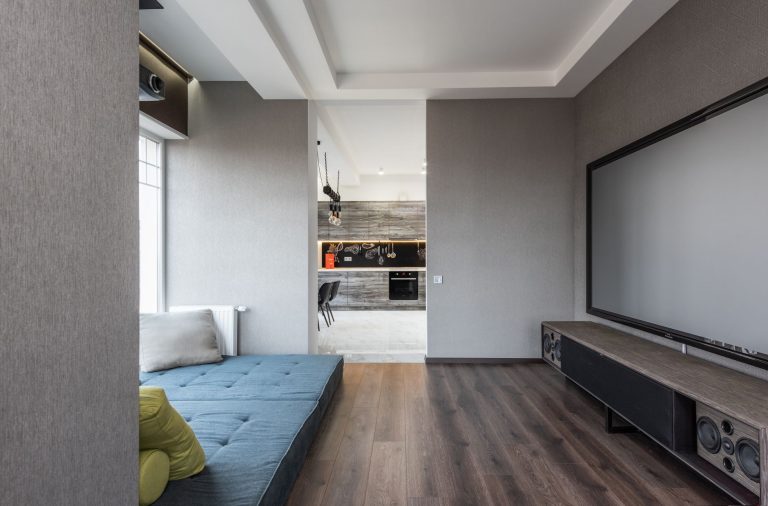
If your man cave, basement or game room has blackout curtains, no windows and dark walls and ceiling, a standard white or light grey screen will likely perform very well, and a black or ALR surface may be unnecessary cost. If you are dealing with a partially lit basement, a room with windows you cannot fully cover, or a multi-use space where you cannot kill every light source during a game, a darker ambient-light-rejecting surface is where the category genuinely earns its keep. For a deeper look at managing light in rooms that cannot go fully dark, our basement projector setup guide walks through the practical side of this trade-off.
Black Screen vs ALR vs Standard White: Picking the Right Surface
This is where most buyers get stuck, because manufacturers use “black,” “ALR” and “high contrast” somewhat loosely. Treat the decision as a three-way comparison based on your room, not the marketing copy.
Dedicated Dark Room
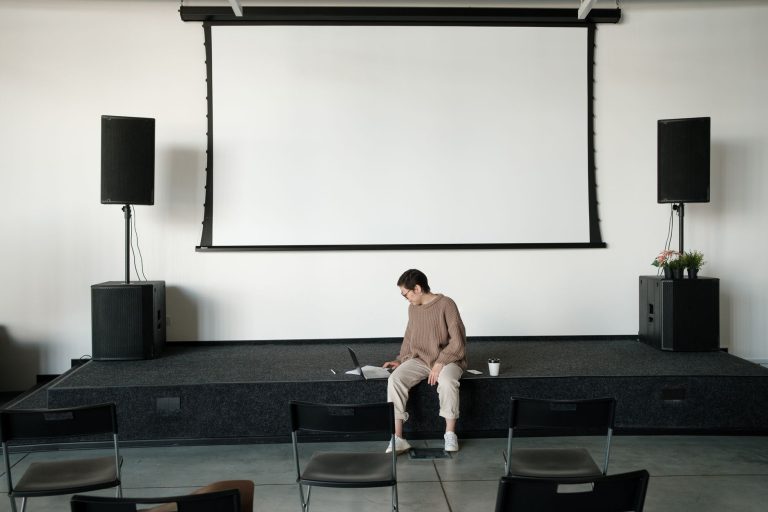
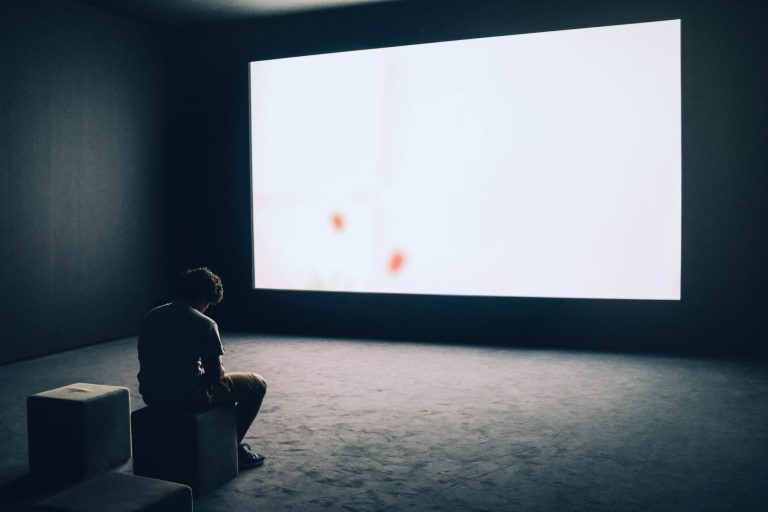
If the room is a true home theatre with no ambient light during viewing, spend your budget on the projector and sound instead of a specialty screen. A quality white or light grey matte screen will give you accurate colour and wide viewing angles without the narrower sweet spot that some ALR materials introduce.
Partially Lit Man Cave or Basement
This is the classic case for a black or ALR screen. These surfaces are built to reject light coming from above and the sides while still reflecting the projector’s image strongly toward your seating area. Expect a narrower optimal viewing angle in exchange for better contrast, so check the manufacturer’s spec sheet for the quoted viewing cone and compare it against your actual seating width before you buy.
Mixed-Use Game Room
If the screen doubles as a backdrop for console gaming with the lights partly on, a black or grey-black ALR surface paired with a shorter throw, brighter projector tends to hold up better than a standard white screen. If you are also shopping projectors for this kind of room, our short throw projector buying guide covers compatible models and placement.
Worth checking before you buy: many black and ALR screens are sold in fixed-frame or motorised formats rather than simple pull-down options, which changes your mounting plan. If a retractable setup matters to you for a multi-use room, read our retractable projector screen buying guide before you commit to a surface type, since not every ALR or black material is available in that format. For a more detailed breakdown of ALR technology specifically, our ALR screen buying guide is the better next read if that is the direction you are leaning.
If you want to compare a few current options side by side, this search is a reasonable starting point: black ambient light rejecting projector screens on Amazon.
Sizing and Placement Checklist
- Throw distance: confirm your projector’s throw ratio against the screen width you are considering. Manufacturers typically spec a range, so measure your actual projector-to-wall distance before ordering.
- Viewing cone: ALR and black screens commonly have a narrower off-axis viewing angle than white matte screens. Check the spec sheet, but plan your seating to sit roughly within the quoted cone, not at the edges of the room.
- Gain and brightness: a black or ALR screen often has a different gain rating than a standard white one. As a rule of thumb, pair a darker screen with a brighter projector lumen rating to avoid a dim image, and confirm the projector’s output against the screen’s recommended lumen range.
- Mounting style: fixed frame, motorised and manual pull-down versions all exist in black and ALR materials, but not every size or finish is available in every format. Check availability for your exact dimensions before falling in love with a specific model.
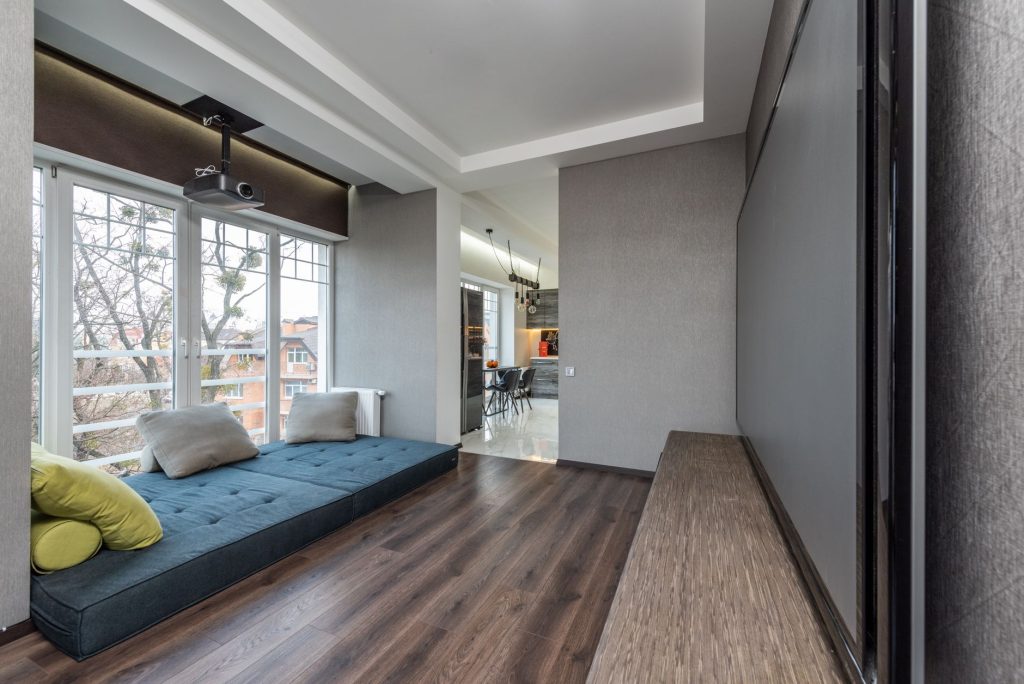
- Ceiling and bracket clearance: if you are pairing the screen with a ceiling-mounted projector, plan for the mount to cost you roughly a few inches of usable throw distance and headroom, and confirm your own ceiling height and joist spacing. Our ceiling mount projector bracket buying guide covers this in more depth.
Common Mistakes Buyers Make
- Buying a black or ALR screen for a fully dark room, then being disappointed by a narrower viewing angle and a dimmer image than a white screen would have given.
- Ignoring the quoted gain and lumen pairing, resulting in a picture that looks dull even though the contrast is technically better.
- Assuming every ALR screen rejects light the same way. Weave-based and specialty-coated surfaces behave differently depending on whether the light source is overhead, from the side, or both, so check which the product is actually designed for.
- Skipping the throw distance and viewing cone check, then discovering the screen does not suit the room layout after it is already mounted.
- Overlooking screen paint as a cheaper alternative for small, dark-leaning rooms. It will not match a purpose-built ALR surface for contrast, but it is worth a look if budget is tight. Our projector screen paint buying guide explains where it does and doesn’t work.
FAQ
Does a black projector screen actually improve picture quality?
In a room with some ambient light, yes, a well-matched black or ALR screen can noticeably deepen perceived black levels and contrast compared with a standard white surface. In a fully dark room, the improvement is usually smaller and may not be worth the trade-off in viewing angle.
Is a black projector screen the same as an ALR screen?
Not always. Some black-toned screens are simply high-contrast grey-black materials for deeper blacks, while true ALR screens use a specific weave or coating engineered to reject ambient light from particular directions. Check the product description for which one you are actually buying.
Will a black screen make the image too dark?
It can, if the projector’s brightness is not matched to the screen’s gain rating. As a rule of thumb, pair darker screens with a projector on the brighter end of its category and confirm the manufacturer’s recommended lumen range before buying.
Can I use a black projector screen for daytime gaming?
Yes, this is one of the better use cases, provided the projector is bright enough and your seating sits within the screen’s quoted viewing cone. Pairing a black or ALR surface with a short throw projector tends to work well in multi-use game rooms.
Final Recommendation
Choose a black or ALR projector screen when your room has light you cannot fully control and you are willing to trade some off-axis viewing angle for deeper contrast. If your space is already dark, save the money and put it toward a better projector instead. Whichever direction you go, measure your throw distance and seating layout first, then shop for a surface and mount built around those numbers rather than the other way round. If you want to compare fixed-frame and motorised black screen options directly, this Amazon search for black projector screens is a solid place to start, alongside a search for high-contrast screen alternatives if you want to weigh up a lighter-toned option too.